Why Is Creating KDP Books So Hard? 9 Real Reasons Beginners Struggle in 2026
Why KDP feels overwhelming for printable creators — and the simple shifts that make publishing easier.
If you are a printable creator, coloring-book seller, or digital product builder, you have probably asked this at least once: why is creating KDP books so hard?
From the outside, Amazon KDP looks simple. Make a book, upload the files, write a listing, and wait for sales. But once you actually try to publish, you realize KDP is not just one task. It is formatting, design, metadata, compliance, positioning, and marketing all stacked on top of each other.
That is exactly why it feels hard.
The good news? It is not hard because you are bad at this. It is hard because you are learning several business skills at once. And if you sell printables, coloring books, planners, journals, or low-content products, that learning curve can feel even steeper because quality and presentation matter so much.
Quick Take
Creating KDP books feels hard because you’re learning formatting, cover setup, keywords, categories, and product positioning at the same time. For printable creators, it gets easier when you stop reinventing the process and build one repeatable publishing workflow.
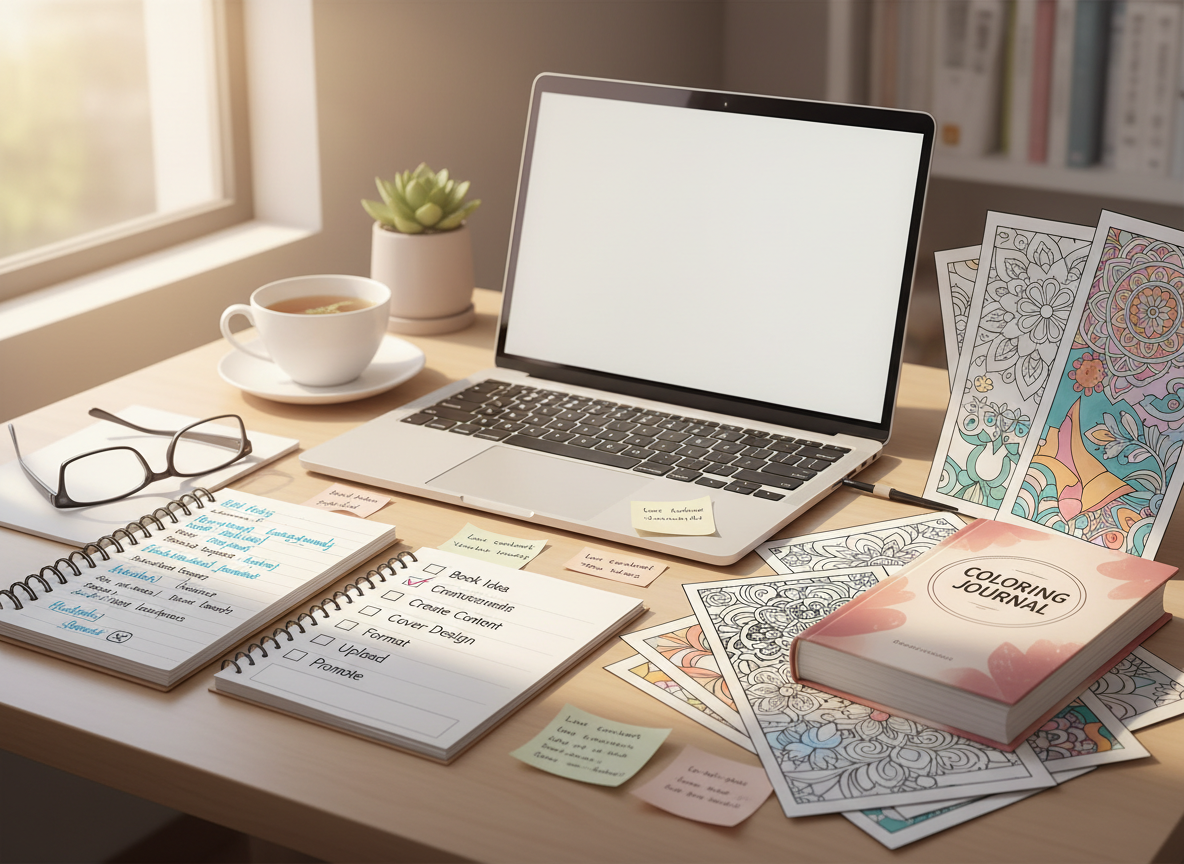
Why KDP feels especially hard for printable creators
Marketplace competition changes how your product gets judged
If you come from the printable world, you are already used to creating digital products. But KDP adds a layer of rules and production details that can slow you down fast.
Instead of just making something useful and uploading it to your shop, you also have to think about:
That is a different game than selling a PDF on your own site or GumRoad.
9 real reasons creating KDP books feels so hard
1. You are not just creating a product. You are building a print-ready product.
A printable can be flexible. A KDP book has to be much tighter.
Your pages need to be sized correctly, margins need to work, images need to print well, and the final file has to meet Amazon KDP Help requirements. That means your creative process has to work together with production rules.
2. Formatting problems can wreck momentum fast
This is one of the biggest pain points for creators. You finally finish the book, then hit issues with:
A lot of this friction comes from missing small but important details in Amazon’s paperback formatting guidelines .That kind of friction makes KDP feel heavier than it should.
3. Coloring books and printables need stronger visual quality
If you are selling coloring books, activity books, planners, or journals, buyers judge the product fast. The cover has to look clean. The interior has to feel intentional. The layout has to print well.
That means you cannot rely on sloppy formatting or weak design and hope the keyword does all the work.
4. Amazon is a marketplace, not your home base
On your own site, you control the experience. On Amazon, you are competing side by side with thousands of other products.
That changes everything.
Now your title, subtitle, cover, categories, and description all have to work together to win the click.
5. Keyword research is harder than most creators expect
A lot of creators are good at making products but less confident with search behavior. On KDP, that matters.
You need to understand what buyers are actually typing into Amazon, how competitive a phrase is, and whether your book really matches that search intent.
6. Bad advice online makes the process feel worse
There is still a lot of content pushing KDP like it is easy money. That leads creators to believe they should be able to throw together a book quickly and start seeing sales.
Then reality hits: the books that perform usually have better covers, better positioning, cleaner formatting, and clearer buyer targeting.
7. Publishing is only half the job
A lot of creators think the hard part ends when the book goes live. It does not.
Once your book is published, you still need:
8. You are trying to learn too many things at once
This is where most builder-types get stuck. You are trying to learn:
That is a real workload, especially if you are also building your own site, email list, and product catalog.
9. You may be building without a repeatable system
This is the part that quietly makes everything harder.
If every book starts from scratch, every launch feels messy. If you do not have a checklist for interiors, covers, metadata, and publishing steps, KDP will keep feeling harder than it needs to.
Common questions printable creators ask about KDP
Is KDP still worth it in 2026?
Yes, but not as a shortcut. It works better when you treat it like a real product channel and build with quality, consistency, and better positioning.
Is KDP too saturated for coloring books and printables?
Some niches are crowded, yes. But crowded is not the same as impossible. Better positioning, stronger covers, cleaner interiors, and sharper audience targeting still matter.
Why do some KDP books get published but never sell?
Usually it comes down to one or more of these:

How to make KDP easier as a printable creator
Build one repeatable workflow
Start with cleaner products, not more products
A lot of creators try to scale too early. A better move is publishing one solid book that looks trustworthy and solves a clear need.
Treat the listing like part of the product
If you want KDP to feel easier, stop asking how to make more books faster and start asking how to make the process repeatable.
That shift changes everything.
Want a faster way to create coloring book interiors?
If coming up with page ideas, prompts, or book concepts keeps slowing you down, Nurie Creator can help speed up the creative side of the process. It is a useful tool if you want more momentum and less friction in your coloring book workflow.
Affiliate link. I only recommend tools that support my workflow.
Final takeaway
If creating KDP books feels hard, you are probably not failing. You are just trying to build a print-ready product, write a better listing, understand search behavior, and compete in a crowded marketplace all at once.
That is a lot.
The answer is not more chaos. It is a better system.
If you want practical help building digital products, sharpening your offer, and creating with more clarity, join Weekly Build Drops for real-world next steps and builder-friendly momentum.
Common questions printable creators ask about KDP
Join the Weekly Build Drops
Get practical weekly steps, clearer systems, and honest build-in-public updates as I grow CMC Coloring Club from the ground up. If you want less guessing and more momentum in your printable business, this is the place to start.